1. AI-Powered Autofocus & Tracking (Hollywood-level precision)
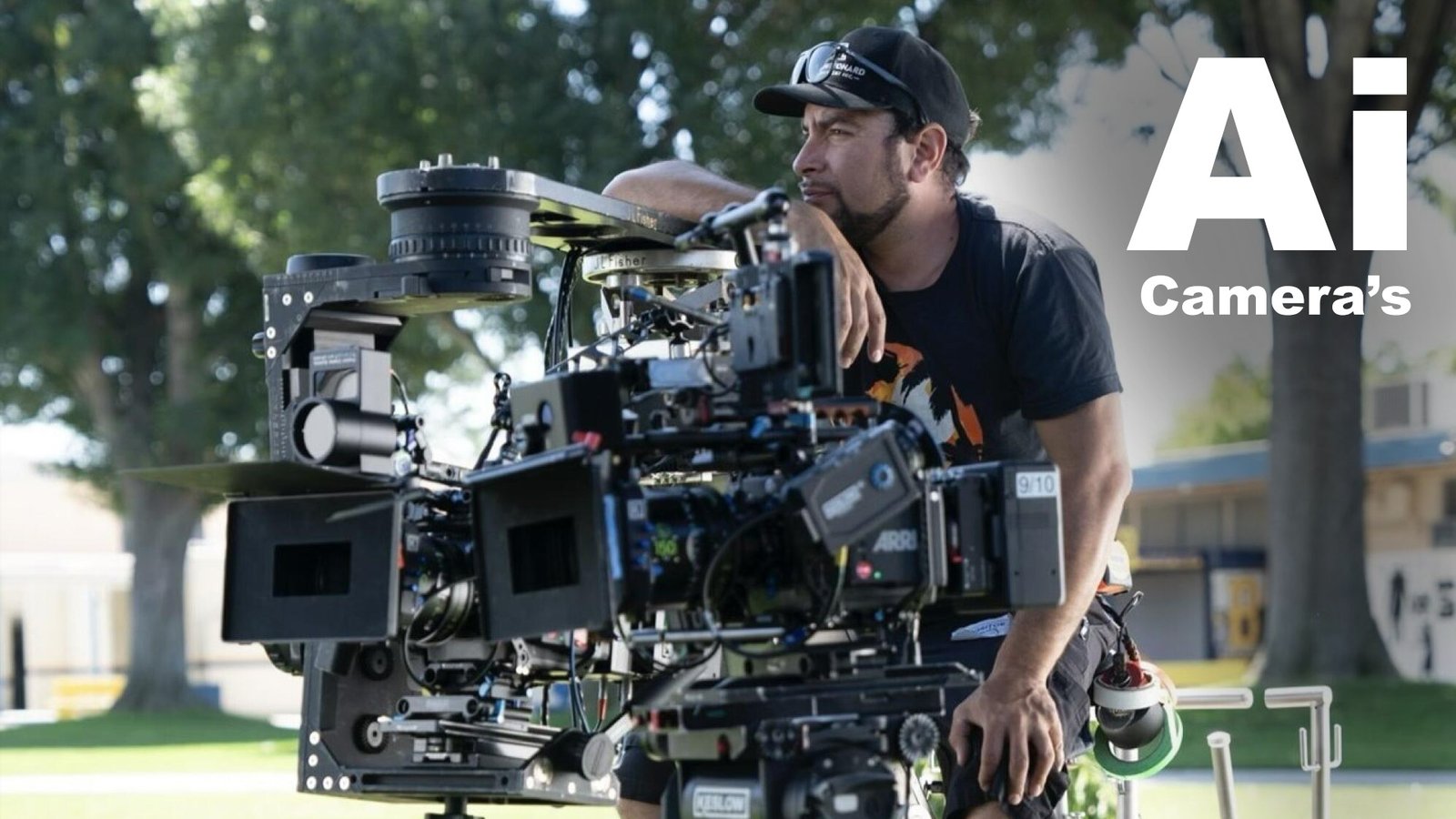
Modern cinema cameras (Sony FX series, Canon Cinema EOS, RED with AI apps) use AI to:
-
Recognize faces, eyes, and even body movement
-
Track actors smoothly even in fast-moving scenes
-
Maintain focus during complex shots (running, turning, low light)
This reduces the need for manual focus pullers in many situations and increases accuracy.
2. AI Stabilization (gimbal-like smoothness)
AI removes camera shake even when the camera is handheld:
-
Detects motion patterns
-
Predicts movement
-
Smooths out vibration and micro-shakes
-
Enhances camera paths (like virtual gimbal motion)
This allows filmmakers to shoot smooth scenes without heavy rigs.
3. AI improves low-light performance
Cinema cameras use AI to:
-
Clean noise in real time
-
Enhance dark areas
-
Reconstruct missing texture
-
Preserve skin tones in low light
This is useful for night scenes or dimly lit dramatic sequences.
4. AI in high-dynamic range (HDR) video
AI helps movie cameras capture details in:
-
Very bright areas (sky, lights)
-
Very dark areas (shadows, night)
It blends multiple exposures intelligently to deliver cinematic dynamic range.
5. AI-assisted color science
AI optimizes colour grading:
-
Auto-matches shots across different cameras
-
Balances skin tones
-
Preserves natural colours
-
Suggests LUTs (cinematic color styles)
Some cameras can now apply “AI LUTs” in real time.
6. AI-based framing & composition
Movie cameras and smart rigs use AI to:
-
Automatically center subjects
-
Maintain “rule of thirds” composition
-
Adjust framing while tracking actors
-
Keep horizon lines level
This helps cinematographers get perfect framing even during complex movement.
7. AI for virtual production (LED volume / Unreal Engine)
In big productions:
-
AI tracks the camera’s position
-
Updates virtual backgrounds instantly
-
Syncs lighting and perspective
-
Creates realistic digital environments
This is used in Marvel/Disney productions and The Mandalorian.
8. AI helps in pre-production (Shot planning)
AI can:
-
Suggest camera angles
-
Predict lighting behaviour
-
Simulate movements before shooting
-
Create animatics (pre-visualization)
Directors can pre-plan scenes more efficiently.
9. AI in post-production (Editing & VFX)
Movie cameras now integrate with AI software that:
-
Removes unwanted objects
-
Upscales resolution (4K → 8K)
-
Reconstructs missing frames
-
Stabilizes shaky shots
-
Enhances slow-motion footage
-
Matches shots from different cameras
AI can even detect continuity errors.
10. AI improves audio-video sync
AI helps cam systems:
-
Sync multiple cameras automatically
-
Match audio waveforms
-
Detect misaligned frames
This speeds up multi-camera production.
🎬 Why AI Matters in Cinema Cameras
AI allows filmmakers to:
-
Shoot more complex scenes with fewer crew
-
Save time in editing
-
Reduce equipment cost (gimbals, lights, rigs)
-
Maintain perfect focus, even in chaos
-
Create bigger worlds (virtual production)
-
Improve image quality without expensive post-processing
AI doesn’t replace cinematographers—
It gives them superpowers.
If you want, I can also explain:






 English